How AI Chatbots Are Transforming Customer Service in Bangladesh
AI chatbot Bangladesh adoption has moved faster than most support teams expected.
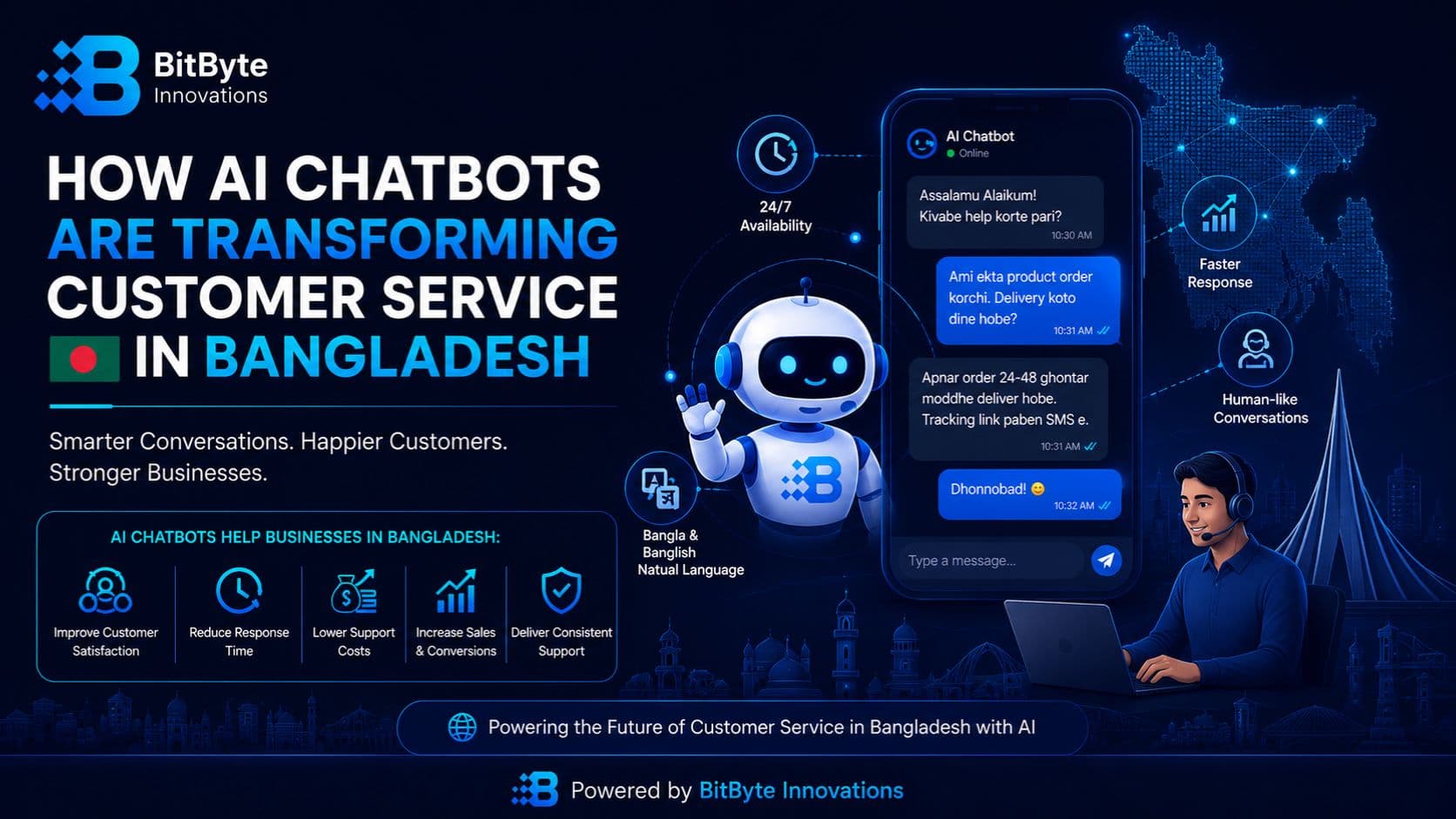
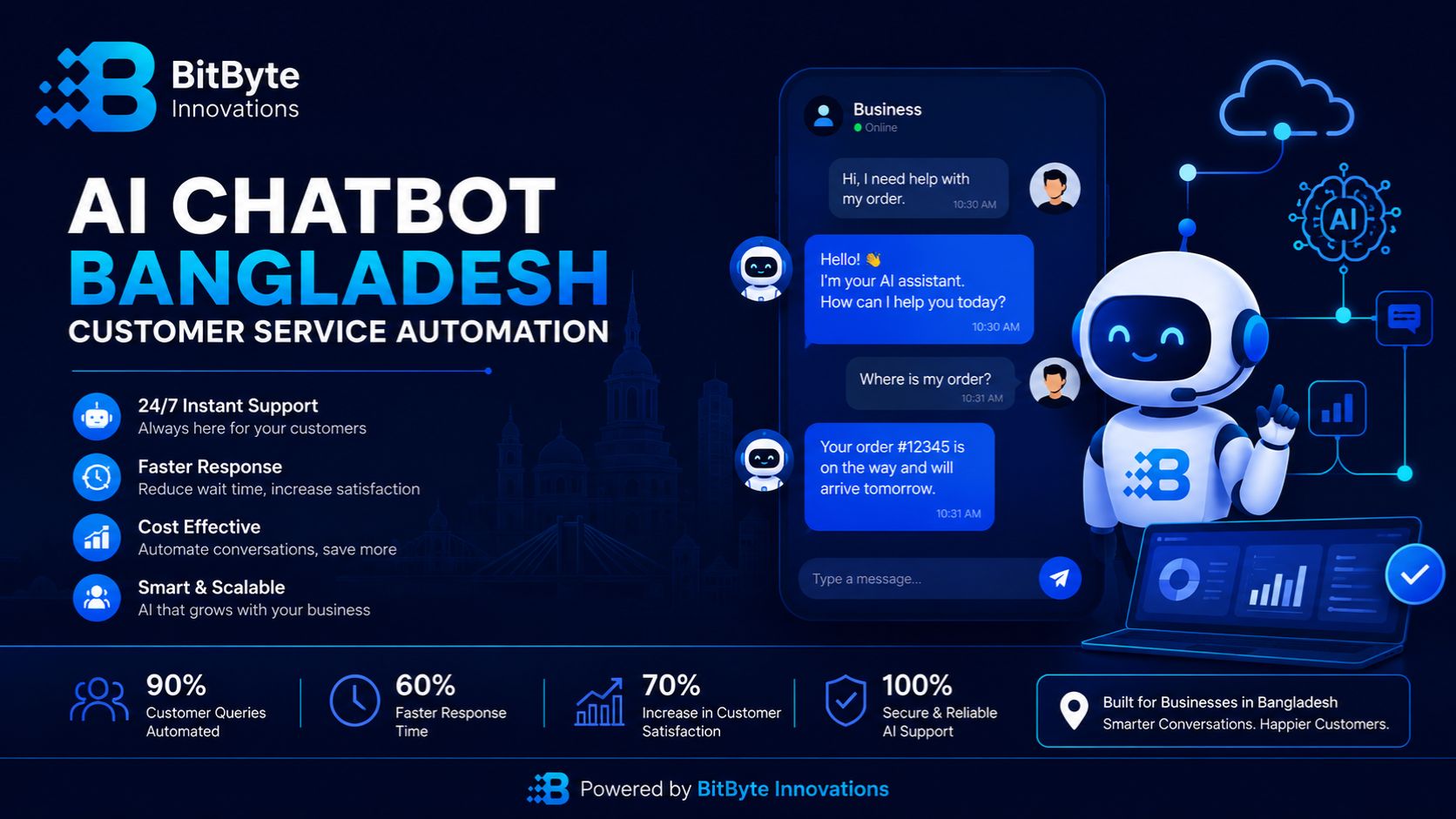
AI chatbot Bangladesh adoption has moved faster than most support teams expected. Customer expectations have shifted just as fast: buyers now message a business page at midnight expecting an instant reply, ask questions in a mix of Bangla and English within the same sentence, and move between Facebook, WhatsApp, and a company website without a second thought. For years, businesses tried to meet that demand with more staff and rigid, script-based chatbots. Neither approach has scaled well. AI chatbots — built on conversational AI and natural language processing rather than fixed decision trees — are changing that equation.
What Is an AI Chatbot?
Before looking at how an ai chatbot Bangladesh business might deploy works in practice, it helps to define the term clearly. An AI chatbot is software that understands and responds to customer messages using natural language processing (NLP) rather than a static list of pre-written replies. Unlike a traditional rule-based bot, which only recognizes exact keywords and breaks the moment a customer phrases a question differently, an AI chatbot interprets intent. It can hold a multi-turn conversation, recall context from earlier in the chat, and take real actions — checking an order status, recommending a product, or collecting a lead’s details — instead of simply pointing a customer toward a menu of options.
For a business, the practical difference shows up immediately in customer satisfaction. A rule-based bot frustrates people who don’t phrase things exactly as expected; an AI chatbot for customer service can follow the conversation the way a human agent would, just without the wait time.
Why Bangladeshi Businesses Are Adopting AI Chatbots
Interest in ai chatbot Bangladesh solutions is no longer limited to large enterprises. Homegrown platforms built specifically for the local market have emerged over the past year, designed to handle a full customer journey from first inquiry to post-sale support rather than just answering FAQs. At the same time, major telecom operators have rolled out AI-powered support assistants inside their own apps, offering instant, human-like responses for everyday account questions. When both small e-commerce sellers and national telecom brands are investing in the same technology, it signals that AI-driven support has moved from experimental to expected.
Three forces are driving this shift at once: rising message volume across Facebook, Instagram, and WhatsApp; customer expectations for immediate replies regardless of the hour; and the operational cost of scaling a human support team fast enough to keep pace with growth. This is exactly why customer service automation Bangladesh businesses are investing in tends to pay for itself well before it becomes a large line item in the budget.
Key Benefits of AI Chatbots for Customer Service
- 24/7 availability — customers browsing and messaging outside office hours get an instant, accurate response instead of waiting until the next business day
- Automatic lead qualification — before a conversation reaches a sales agent, the chatbot can ask about budget, urgency, and product preference, so human time is spent only on serious inquiries
- Consistent, on-brand answers — every customer receives accurate information pulled from approved business data, reducing the risk of an inexperienced agent giving the wrong answer
- Lower operational cost — businesses can maintain round-the-clock coverage without hiring additional night shifts or seasonal support staff
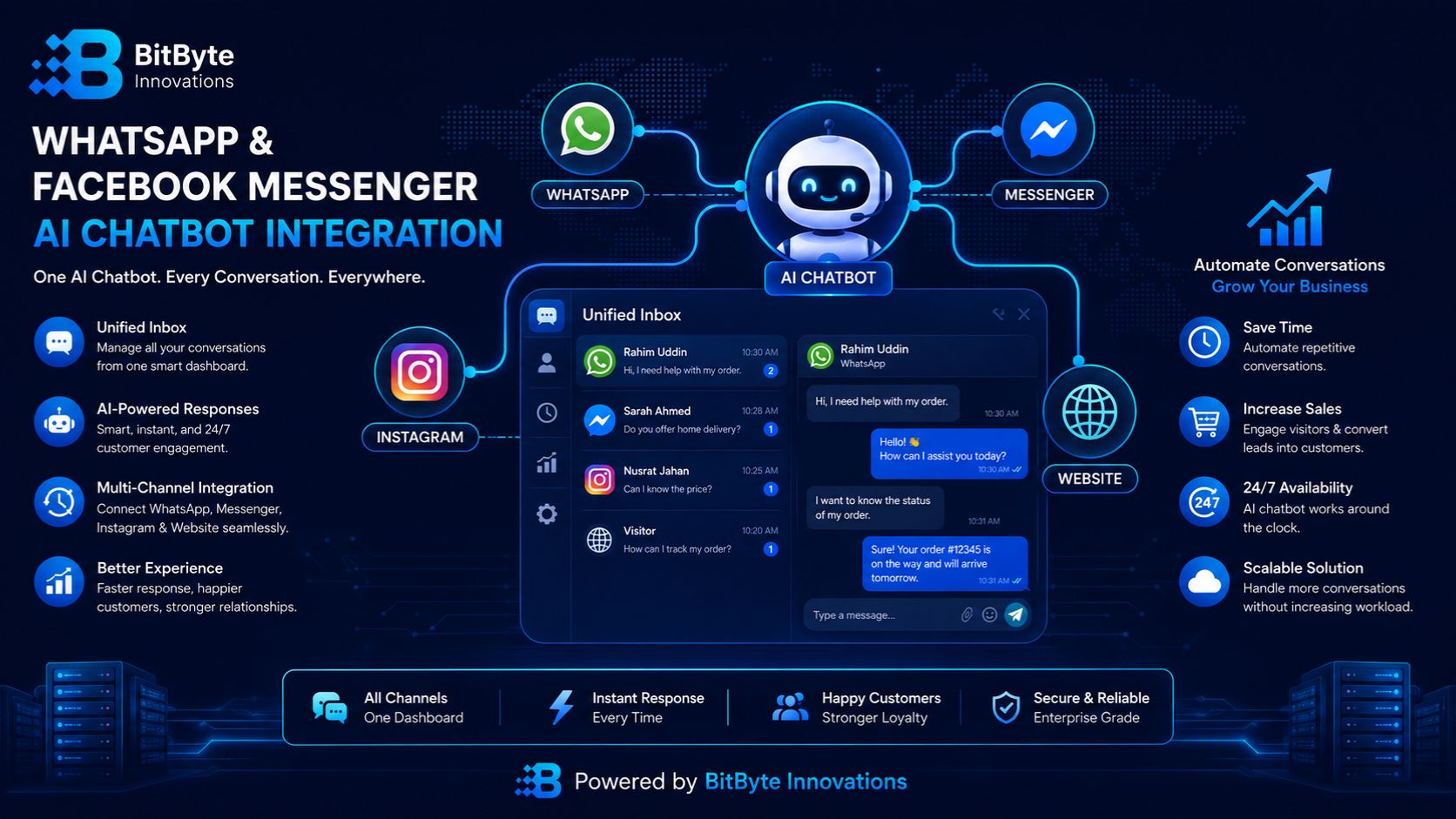
- Multi-channel coverage — a single AI system can manage conversations across a website, Facebook Page, Instagram, and WhatsApp from one unified inbox
- Better performance during peak periods — sales spikes around holidays or promotional campaigns no longer overwhelm a support queue, because the chatbot absorbs the routine volume
These are the same benefits of chatbots for SMEs that make the technology worthwhile even for a business with a small support team, not just for large call centers.
Bangla-First AI: Why Language Matters in Bangladesh’s Market
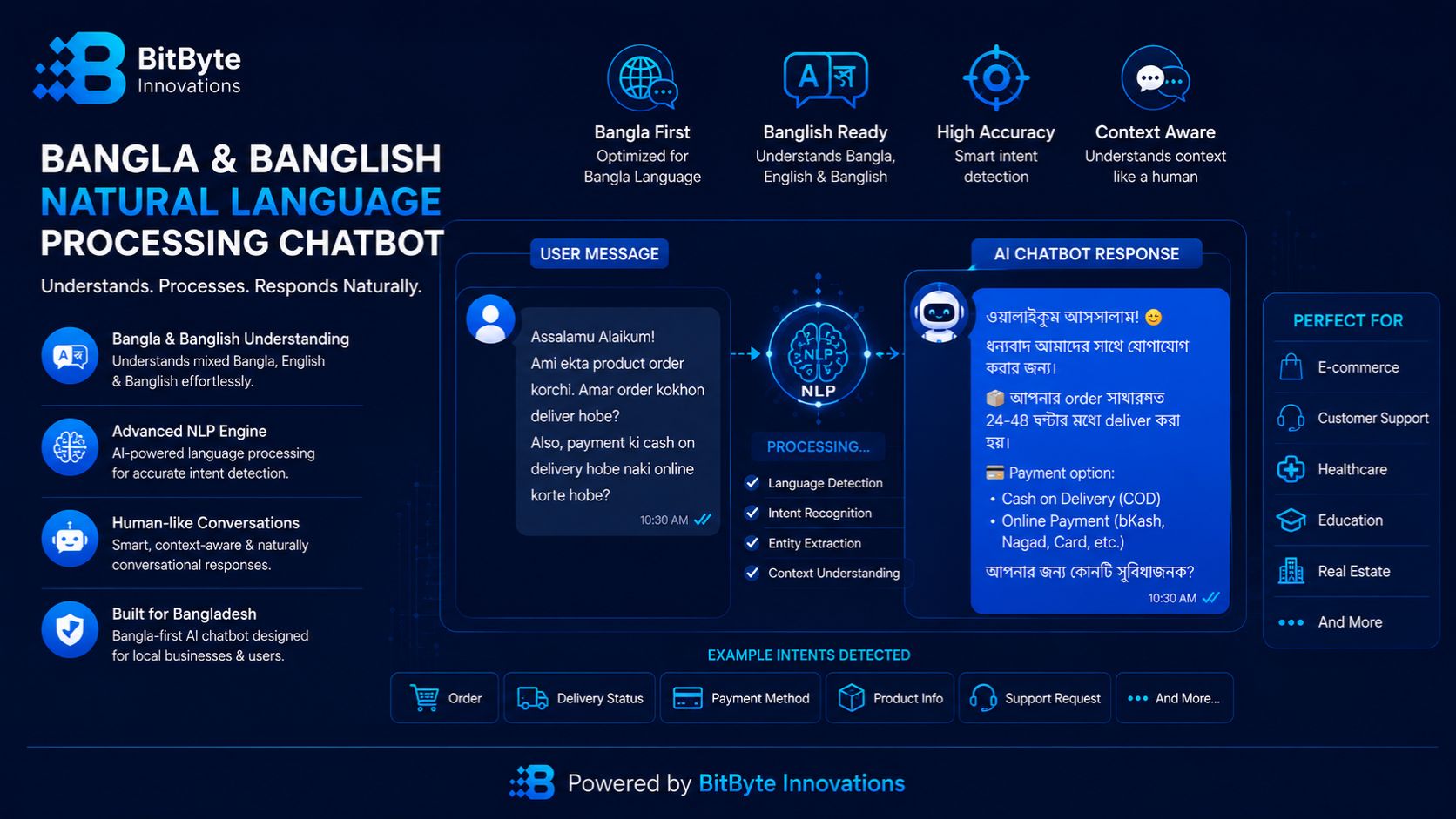
Most customers in Bangladesh don’t write in formal English, and they often don’t write in formal Bangla either — real conversations mix both, along with phonetic Bangla typed in English letters. A chatbot built only for polished English input will misread a large share of genuine customer messages. This is why a Bangla AI chatbot gaining traction locally is built or fine-tuned specifically to understand Bangla, Banglish, and mixed-language phrasing, rather than adapting an English-first tool after the fact.
Getting this right matters commercially, not just technically. A chatbot that misunderstands a customer’s question creates the same frustration as an untrained human agent — except at scale, across every conversation the bot handles. Businesses evaluating an AI chatbot for business Bangladesh should treat native-language understanding as a baseline requirement, not an optional feature.
AI Chatbots vs. Traditional Chatbots
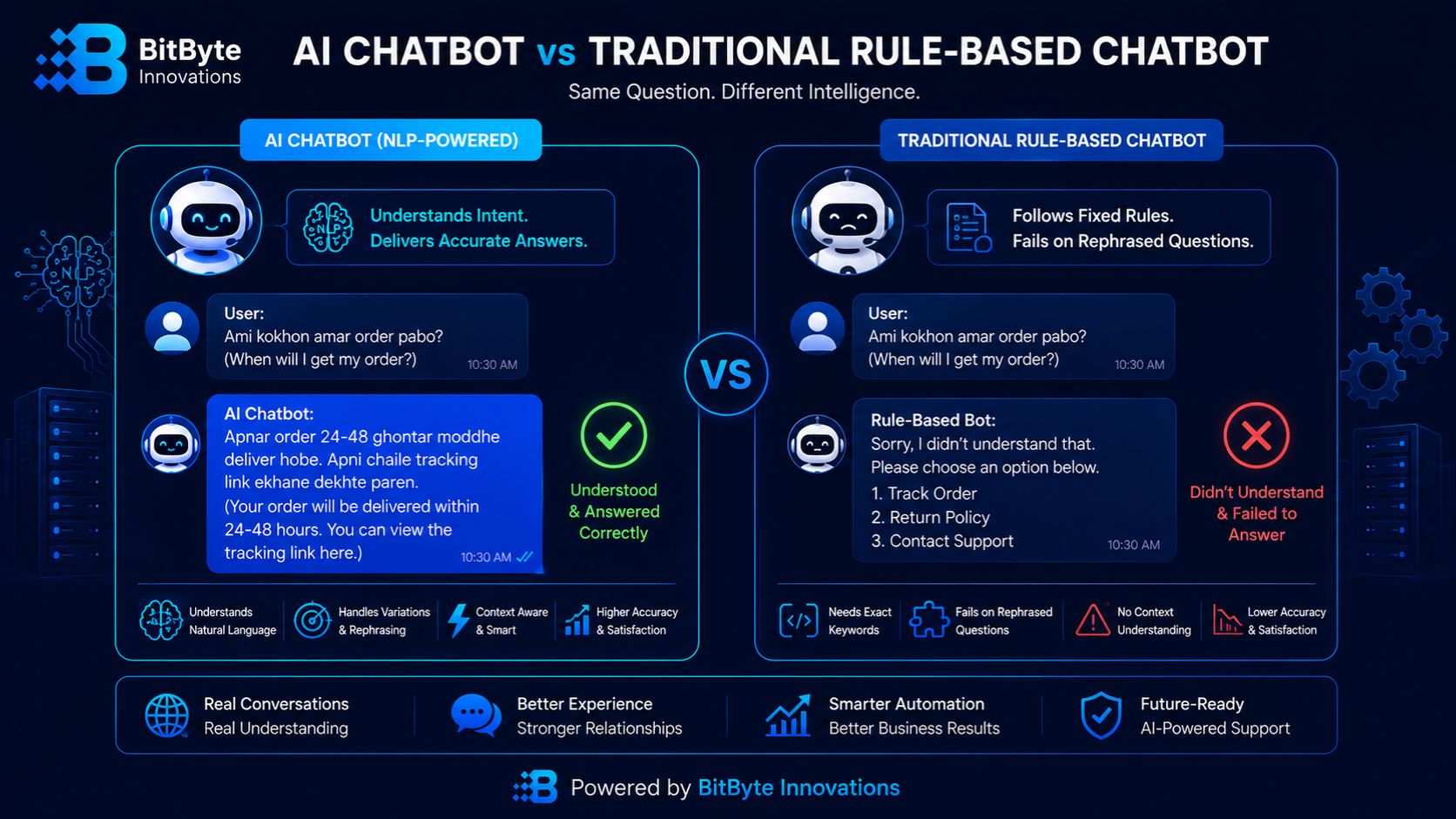
The distinction is worth spelling out because the terms are often used interchangeably in marketing, even though the underlying technology is very different.
- Traditional (rule-based) chatbots match exact keywords and follow a fixed decision tree; they break down the moment a customer phrases something unexpectedly
- AI chatbots interpret intent using NLP, hold context across a conversation, and can complete actions such as placing an order or booking an appointment
- Traditional bots require manual updates every time a new question type appears; AI chatbots can be trained on a business’s existing FAQs, product catalog, and past conversations
- AI chatbots can hand off intelligently to a human agent with full conversation context, rather than dropping the customer into a queue with no history
How to Implement an AI Chatbot for Your Business
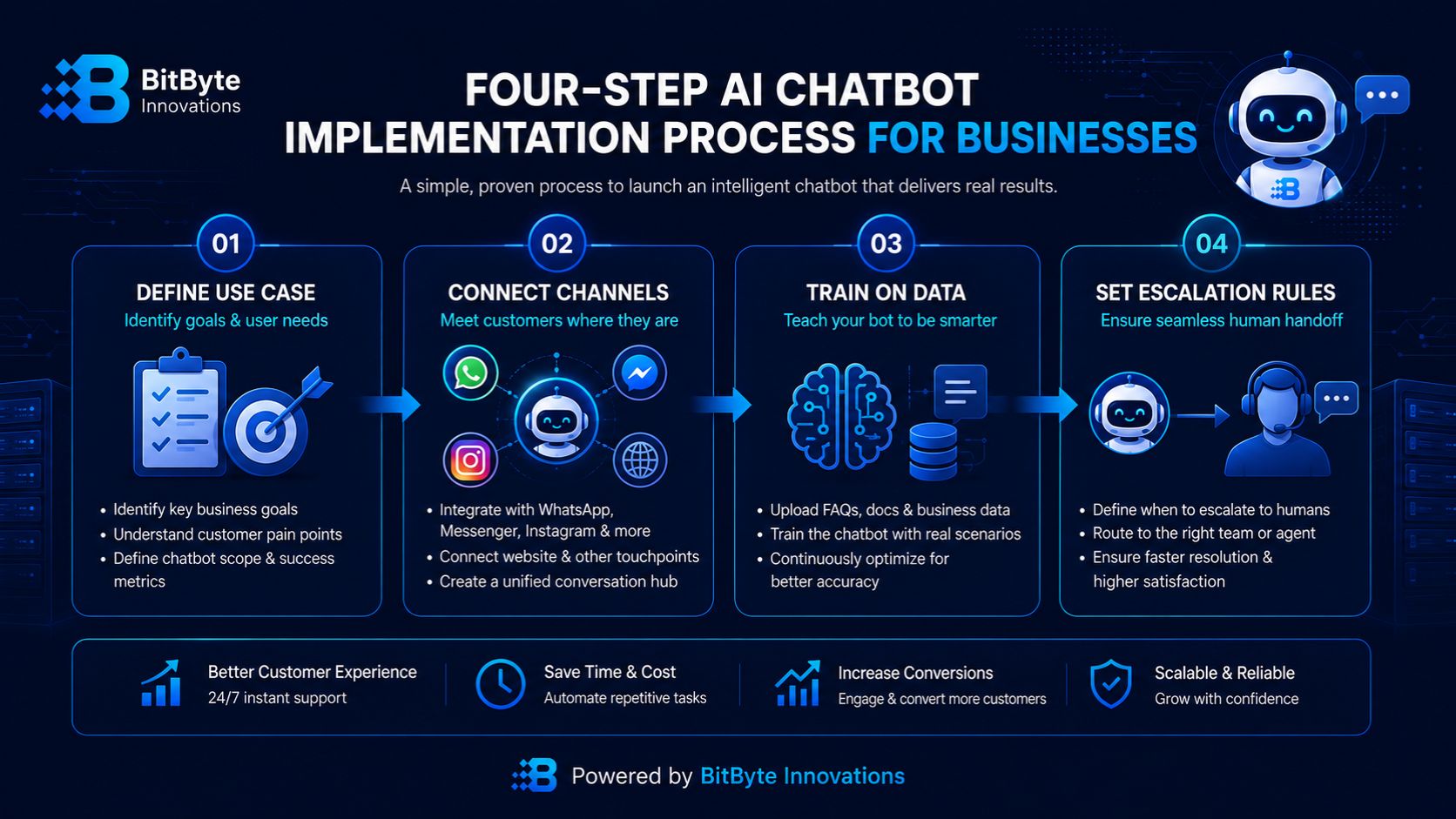
Adopting an AI chatbot doesn’t require an in-house development or AI team. A practical rollout typically follows four steps.
- Define the use case — start with the highest-volume repetitive questions: order status, pricing, delivery timelines, and payment methods are the most common starting points
- Connect your channels — integrate the chatbot with the platforms your customers already use, most commonly Facebook Messenger, WhatsApp, Instagram, and your website
- Train it on real business data — feed the chatbot your actual FAQs, product information, and policies so answers come from approved sources rather than generic AI guesses
- Set clear escalation rules — define exactly when the chatbot should hand off to a human agent, such as complaints, refund requests, or anything outside its approved knowledge base
Businesses that treat this as a phased rollout — starting with FAQ automation before expanding into order tracking or lead qualification — see faster adoption from both customers and internal teams than those that try to automate everything on day one.
The Future of AI Customer Service in Bangladesh
As more Bangladeshi businesses move budget from purely human support toward AI customer support solutions, the gap will widen between companies offering instant, multilingual, 24/7 service and those still relying on manual replies during office hours only. The direction is already visible in how quickly Bangla-first AI platforms have multiplied and how mainstream operators have folded generative AI directly into their customer apps. Businesses that adopt an ai chatbot Bangladesh customers can actually understand — in whichever language they choose to write in — gain a service-quality advantage that becomes harder for slower-moving competitors to close.
Conclusion
AI chatbots are no longer an experimental upgrade for Bangladeshi businesses — an ai chatbot Bangladesh strategy is becoming the baseline for how customers expect to be served. The businesses seeing the strongest results are the ones treating chatbot deployment as a strategic project: choosing the right use cases, prioritizing Bangla-first understanding, and integrating cleanly across the channels customers already use.
If you’re evaluating how an AI chatbot could fit into your customer service and lead generation strategy, BitByte Innovations’ AI Solutions team can help you scope a practical rollout tied to measurable outcomes — from first conversation to full automation. This also pairs naturally with our social media marketing services, since a chatbot is only as effective as the channels feeding it conversations.
Frequently Asked Questions
Is an AI chatbot the same as a regular chatbot?
No. A traditional chatbot follows fixed scripts and keyword matching, while an AI chatbot uses natural language processing to understand intent and hold real conversations.
Can an AI chatbot understand Bangla and Banglish?
Yes, when it is specifically trained or fine-tuned for the local market. Generic English-only chatbots typically perform poorly on mixed-language customer messages, which is why a Bangla AI chatbot built for this market matters more than a generic global tool.
Do I need a developer to launch an AI chatbot?
Not necessarily. Most modern AI chatbot platforms are designed for business owners to configure directly, though a strategic partner can help ensure the right use cases and integrations are prioritized from the start.
Which channels can an AI chatbot cover?
A well-integrated AI chatbot can manage conversations across a website, Facebook Page, Instagram, and WhatsApp from a single, unified system.
What does an AI chatbot company in Bangladesh typically charge?
Pricing depends on the platforms connected, conversation volume, and whether custom training on your specific business data is included. It’s worth comparing a few options from the best AI chatbot company Bangladesh has to offer before committing, since scope varies significantly between providers.
Ready to see what an AI chatbot could handle for your business? Get a free AI chatbot consultation from BitByte Innovations →