
Product Page SEO vs Category Page SEO: What’s the Difference?
Product page SEO vs category page SEO is a distinction a lot of store owners never actually make—both are just “product pages” in their head, optimized the same way with the same keyword stuffed into both.
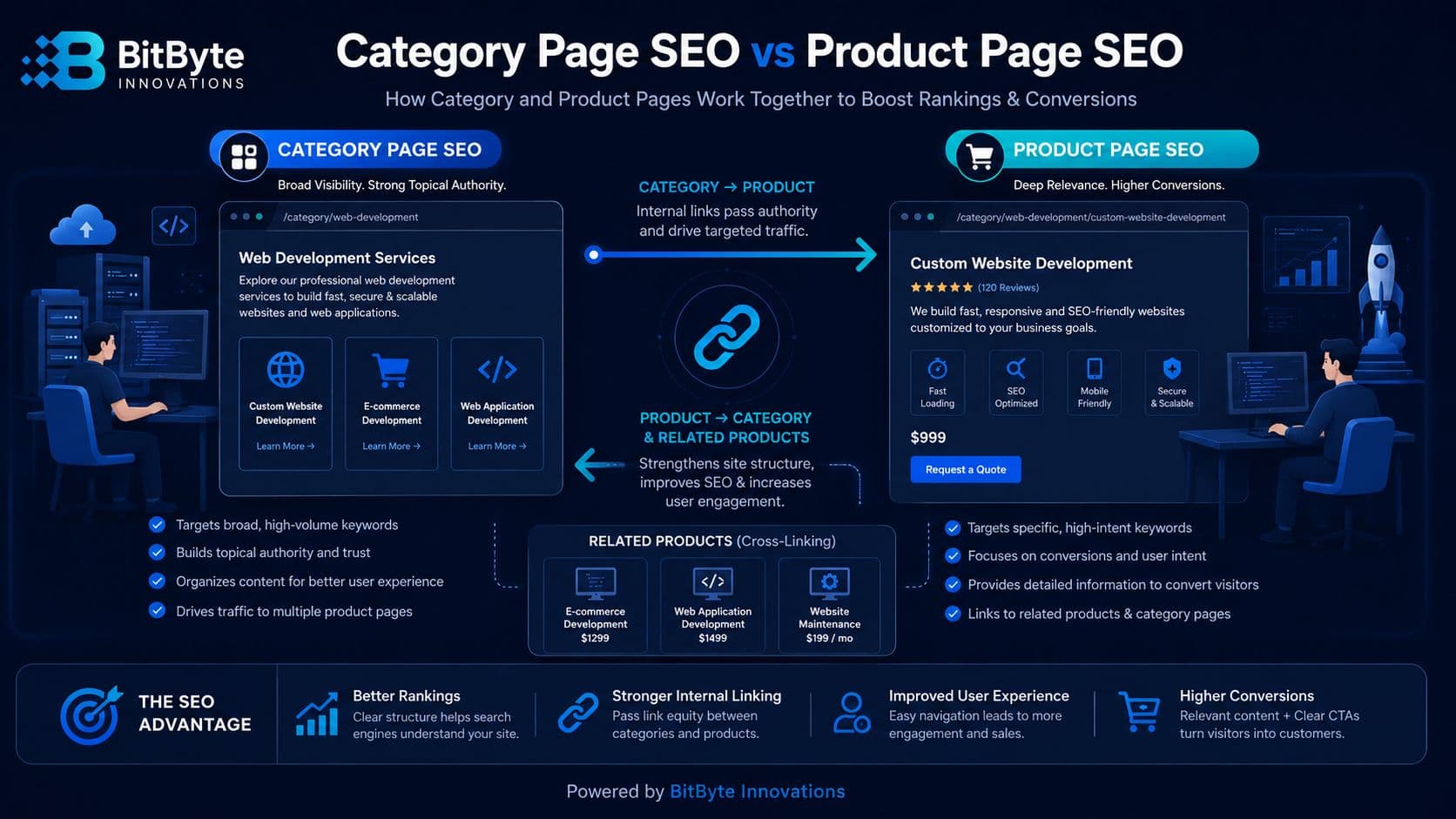
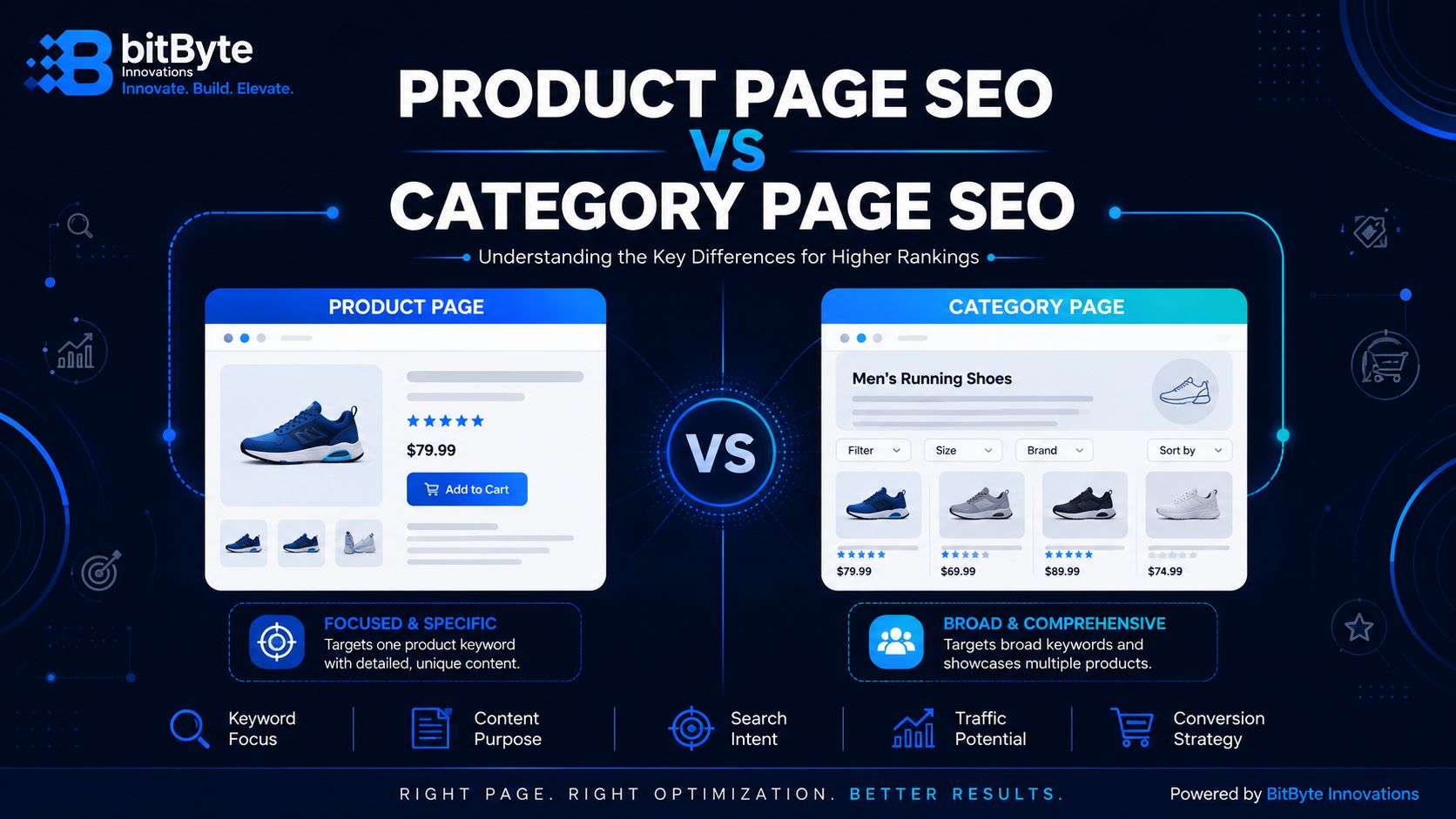
Product page SEO vs category page SEO is a distinction a lot of store owners never actually make—both are just “product pages” in their head, optimized the same way with the same keyword stuffed into both. That mistake is one of the fastest ways to sabotage your own rankings, because it usually means two pages on your own site end up competing against each other for the same search term instead of each capturing a different part of the buying journey.
This guide breaks down exactly how product page SEO and category page SEO differ, why treating them the same causes keyword cannibalization, and how to optimize both so they support each other instead of competing.
Get this distinction right, and your e-commerce product SEO effort compounds—every category and every product contributes its own share of organic traffic instead of two pages quietly fighting each other for the same ranking spot. Get it wrong, and adding more products or categories can actually make your existing pages rank worse, not better.
What Is Product Page SEO?
Product page optimization targets a specific, narrow buyer intent: someone who already knows roughly what they want and is evaluating a single item. The keywords here are specific—a model name, a size, a particular product variant—and the page’s job is to answer every question that buyer has before they add it to cart.
A well-optimized product page includes a unique product title and description, clear pricing and availability, customer reviews, high-quality images, and Product schema markup so the listing can show a star rating directly in Google search results.
Because product pages are evaluated individually rather than as a group, product page optimization tends to be more repetitive work — the same checklist applied consistently across hundreds or thousands of listings — rather than a single strategic decision made once. Stores that only optimize their best-selling handful of products and leave the rest untouched typically see the long tail of their catalog stay invisible in search indefinitely.
What Is Category Page SEO?
Category page ranking depends on a completely different kind of keyword — broader terms with much higher search volume, where the searcher hasn’t narrowed down to one specific product yet. Someone searching “running shoes” is browsing; someone searching a specific shoe model and color is close to buying. Category pages are built to capture that first, broader search.
This is where a lot of stores fall short on ecommerce product seo: category pages get treated as nothing more than a product grid, with no actual text for Google to match against the search query. A page with zero unique content has very little to rank on beyond internal links and domain authority alone.
Category pages also tend to be far fewer in number than product pages — often just a few dozen across an entire catalog — which makes them one of the highest-leverage places to invest SEO effort. Improving ranking on ten well-chosen category pages can move more total traffic than optimizing an equivalent amount of time spent across individual products.
The Key Differences Between Product Page SEO and Category Page SEO
The product page SEO vs. category page distinction comes down to three things: keyword scope, search intent, and content depth.
- Keyword scope: category pages target broad, high-volume terms; product pages target narrow, specific ones
- Search intent: category pages serve browsing and comparison intent; product pages serve near-purchase intent
- Content depth: category pages need a short descriptive introduction above the product grid; product pages need a full, detailed, unique description of one specific item
Google’s own approach to google seo category ranking reflects this — category-type pages are generally evaluated on topical breadth and internal link structure, while individual product pages are evaluated more on specificity and completeness of information about one item.
Why Confusing the Two Causes Keyword Cannibalization
Keyword cannibalization happens when two pages on the same site both target the same keyword, forcing Google to decide which one is more relevant — and often ranking neither particularly well as a result. This is extremely common between product and category pages: a store selling running shoes might have both a category page and a top-selling product page both trying to rank for “running shoes,” splitting authority that should be concentrated on one page.
The fix is deliberate keyword assignment as part of a broader ecommerce keyword strategy: the broad term goes to the category page, and each product page targets its own specific, longer variation — the exact model, size, or feature combination a buyer close to purchase would search for.
Product Page SEO Checklist
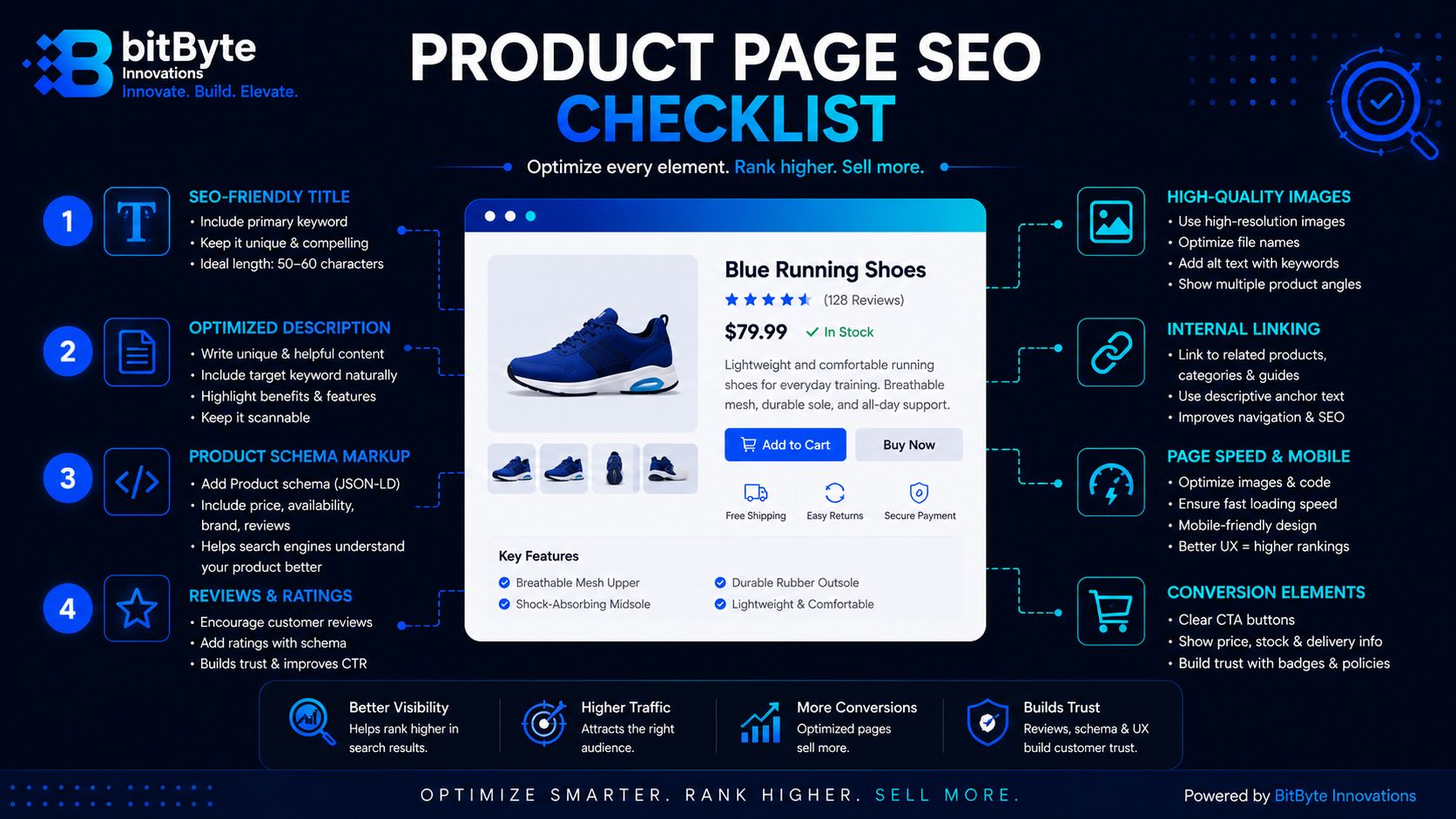
Use this product SEO checklist for every individual product listing:
- Unique product title including the specific model, variant, or key feature
- An original description — never copied from a supplier catalog
- Product, Review, and AggregateRating schema markup
- Optimized image alt text describing the actual product
- Clear pricing, availability, and shipping information
- At least one internal link back to its parent category page
Category Page Optimization Checklist
Use this checklist for category page optimization:
- A short, genuinely useful introductory paragraph above the product grid
- A broad, high-volume target keyword — not the same keyword used on any single product page
- Canonical tags on filtered or sorted versions of the page, pointing back to the main category URL
- Internal links down to featured or top-selling products within the category
- Clear, logical breadcrumb navigation showing the category hierarchy
How They Work Together in an Ecommerce SEO Strategy
Product and category pages aren’t competitors in a healthy ecommerce SEO strategy — they’re two stages of the same funnel. A category page captures the broad, early-stage search, then hands the visitor down to the right product page once they’ve narrowed their choice. Each stage needs its own keyword and its own content depth to do that job well.
This same principle applies across an entire store, not just one category: every category should have one clear target keyword, and every product underneath it should target its own more specific variation, so the site builds topical coverage instead of internal competition.
Internal Linking for Ecommerce: Connecting Category and Product Pages
Strong internal linking for ecommerce sites reinforces the distinction between page types instead of blurring it. Category pages should link down to their best or newest products; product pages should link back to their parent category and across to related products.
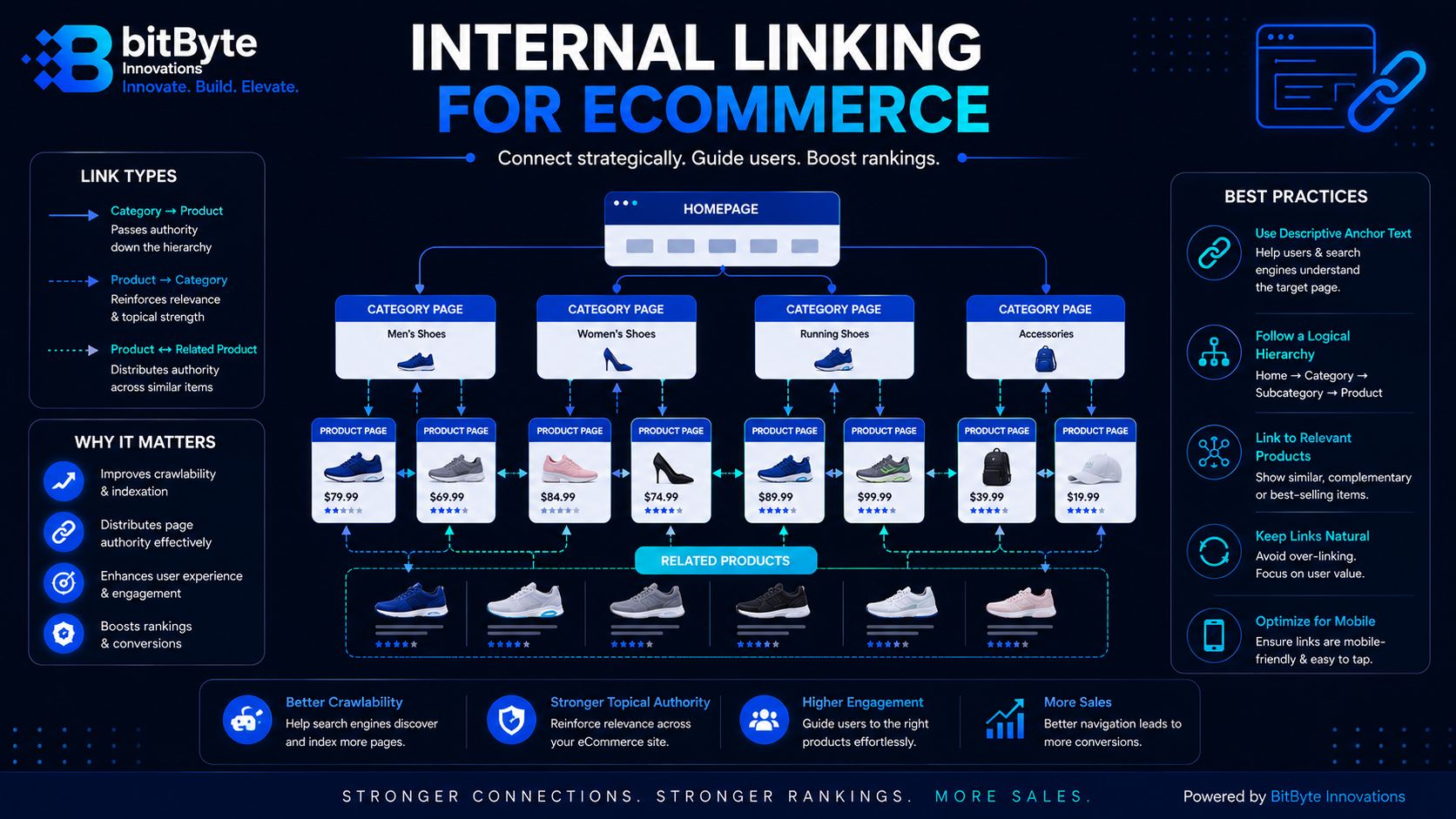
This structure helps search engines understand which page is the broad entry point and which are the specific destinations, while also helping shoppers navigate naturally between the two.
Common Mistakes to Avoid
Even after understanding product page seo vs category page differences in theory, a few mistakes tend to creep back in during day-to-day catalog management:
- Adding a new product and giving it the exact keyword its category page already targets
- Copying category page introduction text across multiple categories with only the product name swapped
- Letting sort and filter parameters generate indexable near-duplicates of the same category page
- Writing detailed, keyword-rich content on product pages but leaving category pages blank
Reviewing keyword assignment periodically—especially after adding new products or categories — keeps a growing catalog from slowly drifting back into keyword cannibalization even after an initial cleanup.
Frequently Asked Questions about Product Page SEO vs Category Page SEO
A few common questions on product page seo vs category page differences, answered directly:
Should a category page and its best-selling product ever target the same keyword?
No. Assign the broad keyword to the category page and a more specific, longer variation to the product page to avoid keyword cannibalization between the two.
Which page type is more important for SEO —Product Page SEO and Category Page SEO
Category pages often carry more overall ranking potential because they target higher-volume search terms, but product pages capture buyers closest to purchasing. A complete ecommerce SEO strategy needs both optimized, not one prioritized over the other.
How much content does a category page actually need?
Even two or three well-written sentences above the product grid are usually enough to give Google real text to match against a search query — category pages don’t need to read like a blog post.
Not sure whether your product and category pages are competing against each other? Getting product page seo vs category page assignment right across a full catalog is exactly the kind of audit that’s easy to overlook and expensive to leave unfixed. BitByte Innovations’ e-commerce SEO services include a full keyword mapping audit to fix this. Get a free SEO audit →