
Vulnerability Assessment vs Penetration Testing: What’s the Difference?
Vulnerability assessment vs penetration testing is one of the most commonly confused pairings in cyber security, and it’s an expensive confusion to have — businesses regularly pay for the wrong one, or assume one covers what only the other actually does. Both matter.

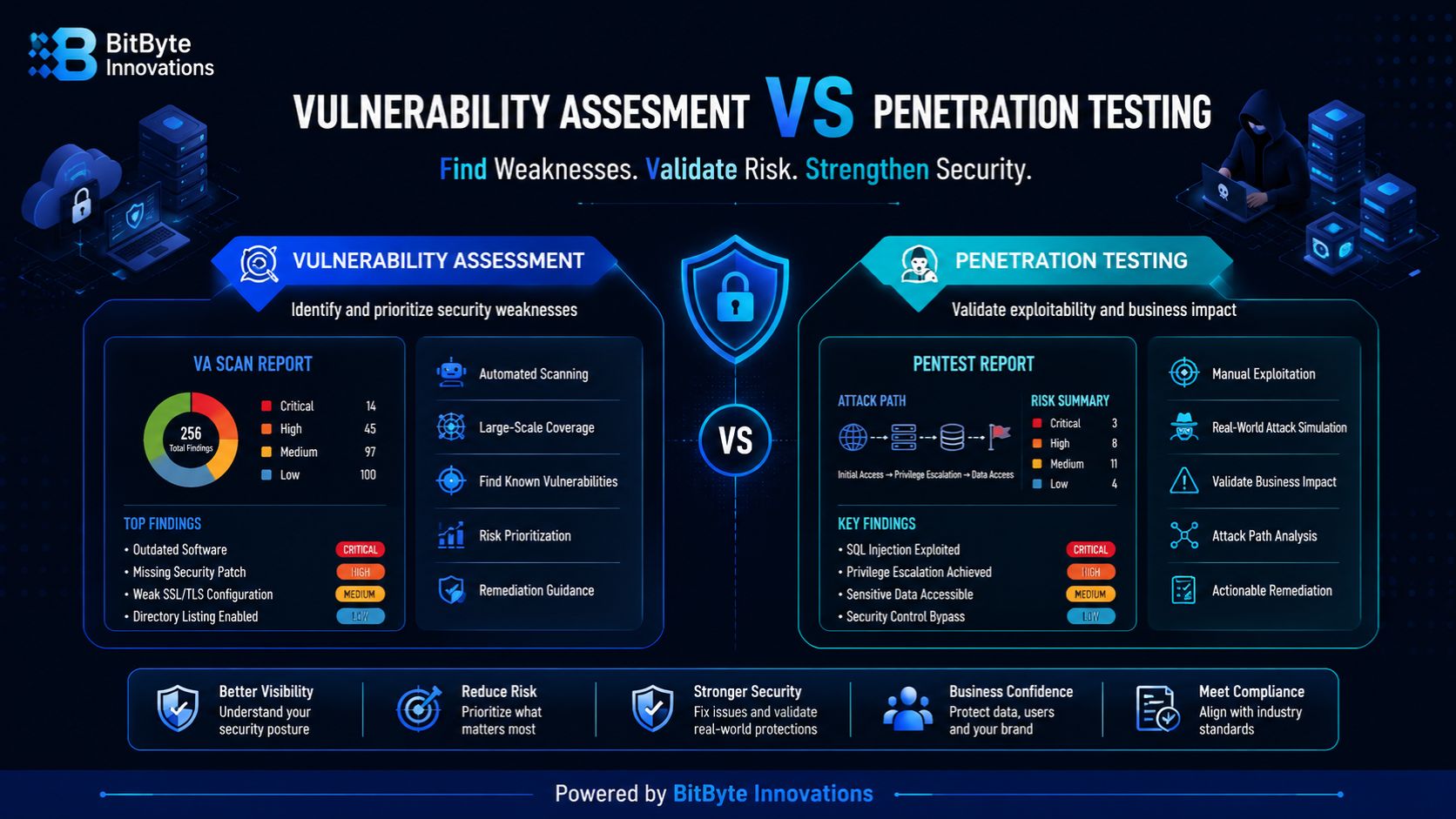
Vulnerability assessment vs penetration testing is one of the most commonly confused pairings in cyber security, and it’s an expensive confusion to have — businesses regularly pay for the wrong one, or assume one covers what only the other actually does. Both matter. Both are usually recommended together. But they answer genuinely different questions, and knowing which one you actually need before you call a security vendor can save both budget and time.
Whether you’ve heard it phrased as the difference between vulnerability assessment and penetration testing, or as the more casual pen testing vs vulnerability testing, the underlying question is the same: one identifies potential weaknesses, and the other proves which of those weaknesses can actually be exploited. Understanding that distinction—and knowing when you need one, the other, or both — is what this guide covers.
What Is a Vulnerability Assessment?
A vulnerability assessment is a systematic scan of systems, applications, and infrastructure to identify known weaknesses — outdated software, missing patches, misconfigurations, and other exploitable issues. The output is typically a prioritized list, ranked by severity and exploitability, showing everywhere a system could potentially be attacked.
This is largely an automated process. Vulnerability scanning tools check systems against a constantly updated database of known vulnerabilities, which makes it fast, repeatable, and relatively affordable to run frequently — monthly or even weekly for businesses with a larger attack surface.
Because it’s automated and broad, a vulnerability assessment is very good at answering “what could theoretically be wrong here?” across an entire environment at once. What it’s less good at is telling you whether any given finding is actually dangerous in practice — a scanner will flag a theoretical weakness with the same urgency as one an attacker could exploit in minutes, which is exactly the gap penetration testing exists to close.
What Is Penetration Testing?
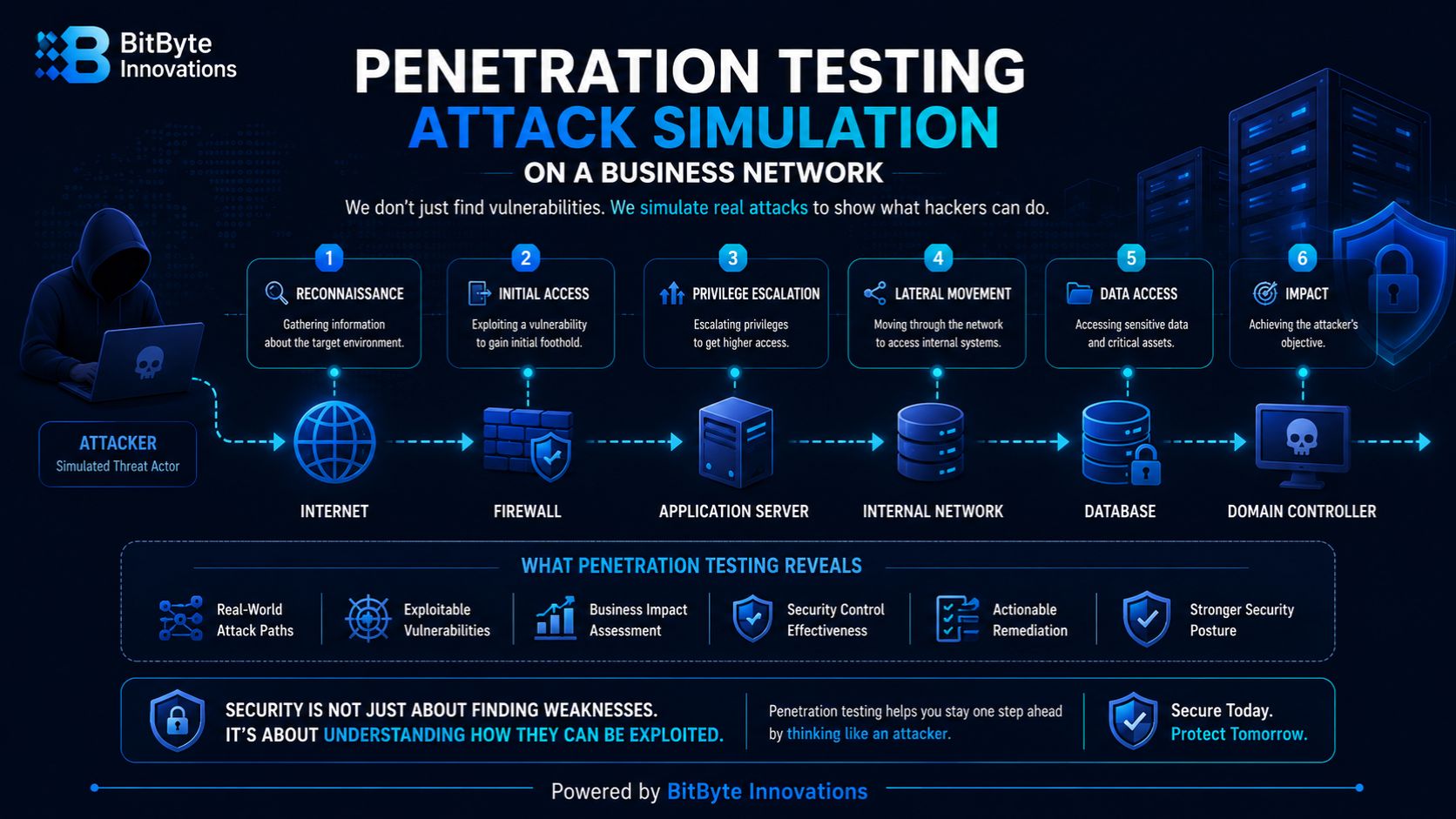
Penetration testing goes a step further: instead of just identifying that a weakness might exist, a skilled tester actively attempts to exploit it, the way a real attacker would. This is a controlled attack simulation carried out with the client’s permission, designed to confirm which vulnerabilities are genuinely dangerous versus which are theoretical.
Because it requires a human tester applying judgment and creativity rather than running an automated scan, penetration testing is more time-consuming, more expensive per engagement, and typically run less frequently — often annually, or after a major system change.
A good penetration test doesn’t stop at confirming a single vulnerability either. Testers often chain smaller weaknesses together — a minor misconfiguration here, a weak password there — to demonstrate how far an attacker could actually get into a system, which is information no automated scan can produce on its own.
Vulnerability Assessment vs Penetration Testing: The Key Differences
- Scope: a vulnerability assessment is broad, scanning everything for known issues; a penetration test is deep, focusing on exploiting specific weaknesses
- Method: vulnerability assessments are largely automated; penetration testing is manual, human-led testing
- Output: a vulnerability assessment produces a prioritized list of potential issues; a penetration test produces proof of what’s actually exploitable and how far an attacker could get
- Frequency: vulnerability assessments run frequently (monthly or quarterly); penetration tests typically run annually or after major changes
- Cost: vulnerability assessments are lower-cost and scalable; penetration testing is a higher-cost, specialized engagement
Some teams shorten this comparison to pen test vs vulnerability test, or even the more casual va vs pentest — different phrasing for exactly the same underlying question. Whether it’s framed as the difference between a vulnerability assessment and a penetration test, or as penetration vs vulnerability testing, the five differences above cover what actually matters when deciding between them.
A Closer Look at Scope and Output
The vulnerability assessment and penetration testing difference becomes clearest when you look at what a report from each actually contains. A vulnerability assessment report is a list — often dozens or hundreds of entries — each flagged by severity, with a description of the theoretical risk and a recommended fix. It’s comprehensive by design, covering breadth over depth.
A penetration test report, by contrast, is a narrative. It walks through the specific path a tester took to gain access, what data or systems they were able to reach, and what that access would mean in a real attack. It’s usually shorter than a vulnerability assessment report, but each finding carries far more weight, since it’s been proven rather than merely flagged as possible.
Why You Usually Need Both, Not One or the Other
Vulnerability assessment vs penetration testing isn’t really an either/or decision for most businesses — it’s a sequencing question. A vulnerability assessment tells you where your weaknesses probably are; a penetration test tells you which of those weaknesses an attacker could actually exploit, and what damage they could do once inside. Skipping the assessment and going straight to a pen test risks missing broad coverage; skipping the pen test and relying only on scans risks treating theoretical issues as equally urgent as genuinely exploitable ones.
A well-run security program typically layers both: frequent vulnerability scanning to catch new issues as they appear, combined with periodic penetration testing to validate real-world exploitability and overall security posture. This is also where vulnerability management fits in — the ongoing process of tracking, prioritizing, and actually fixing what both types of testing find, rather than letting reports pile up unread.
In practice, most successful engagements follow a simple loop: run a vulnerability assessment, fix the highest-severity findings, run a penetration test to confirm the fixes hold and probe for anything the scan missed, then repeat on a regular schedule. Treating either one as a single, one-time project rather than part of this ongoing cycle is one of the most common reasons businesses end up with a false sense of security despite having “done” a security test at some point.
Which One Does Your Business Actually Need?
If you’re setting up security testing for the first time or need ongoing, affordable coverage across a large or fast-changing environment, start with a vulnerability assessment. If you’re preparing for a compliance requirement, have just launched a new system or platform, or need to demonstrate real-world security to a partner, investor, or regulator, a penetration test is usually the more appropriate—and more convincing—choice.
For most growing businesses, the realistic answer is both, on different schedules: vulnerability assessments as routine maintenance and penetration testing as a periodic, deeper validation exercise, with risk-based remediation prioritizing whichever findings pose the most actual danger from either.
Frequently Asked Questions
What is the difference between vulnerability assessment and penetration testing?
A vulnerability assessment scans for known weaknesses and reports them by severity. A penetration test actively attempts to exploit those weaknesses to confirm which are genuinely dangerous, going further than identification alone.
What is the difference between penetration testing and vulnerability assessment in terms of cost?
Vulnerability assessments are generally lower-cost and can be run frequently, since much of the process is automated. Penetration testing costs more per engagement because it requires a skilled human tester and is typically run less often.
Do small businesses need penetration testing, or is a vulnerability assessment enough?
It depends on risk exposure. A vulnerability assessment is a reasonable starting point for most small businesses, but any business handling payments, sensitive customer data, or facing compliance requirements should budget for periodic penetration testing as well.
How often should each be done?
Vulnerability assessments are commonly run monthly or quarterly, since new vulnerabilities are discovered constantly. Penetration testing is typically done annually or after any major change to systems, applications, or infrastructure.
Can the same vendor provide both vulnerability assessment and penetration testing?
Yes, and it’s often preferable—a vendor who runs your ongoing vulnerability assessments already has context on your environment, which makes a subsequent penetration test more efficient and better targeted than starting from scratch with a separate provider.
Not sure which one your business needs right now? BitByte Innovations’ cybersecurity services include both vulnerability assessment and penetration testing, scoped to your actual risk rather than a one-size-fits-all package. Get a free security consultation →