5 Cyber Security Threats in Bangladesh Every Business Should Know
Cyber security threats in Bangladesh have moved well beyond the occasional suspicious email.
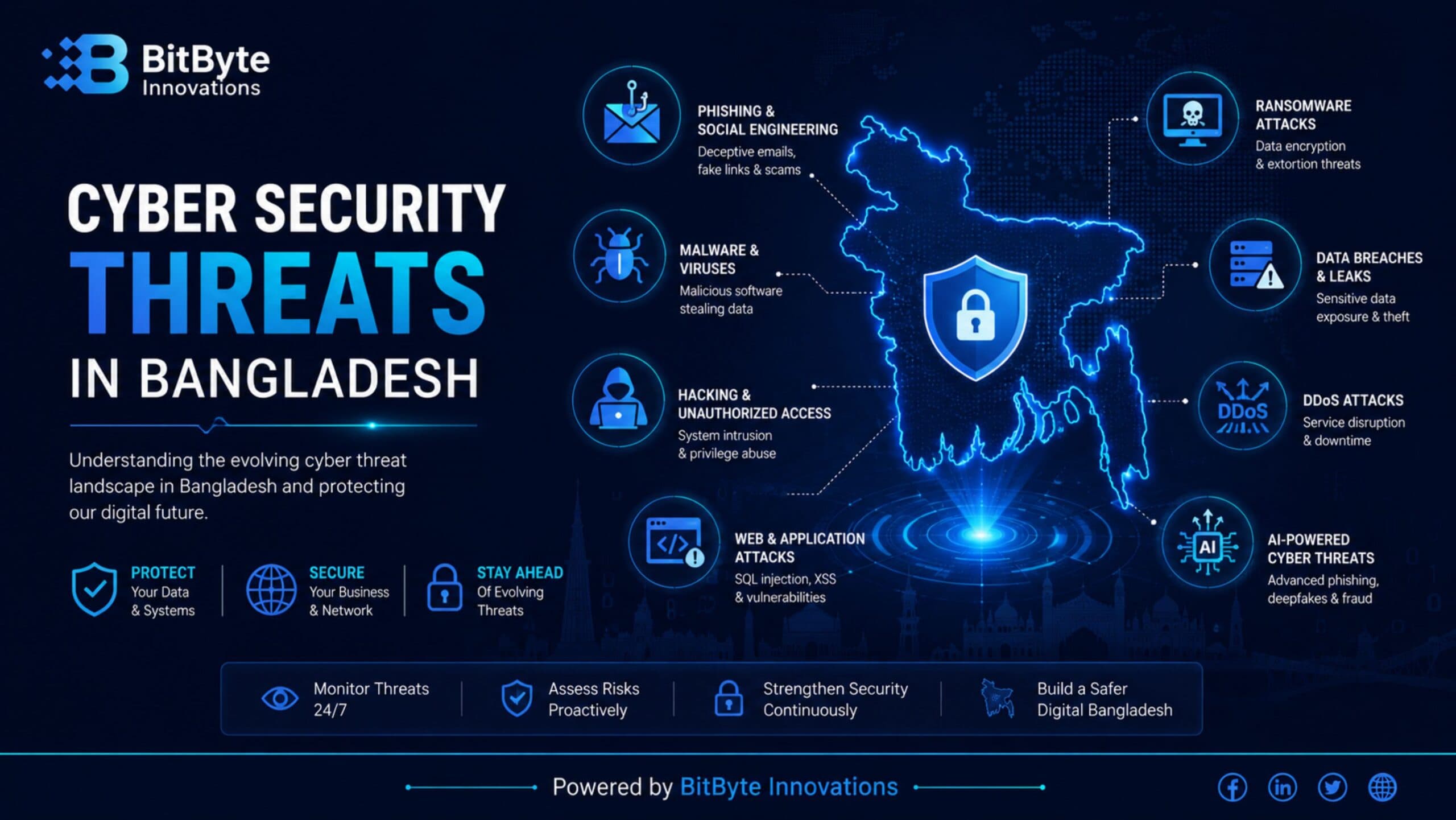
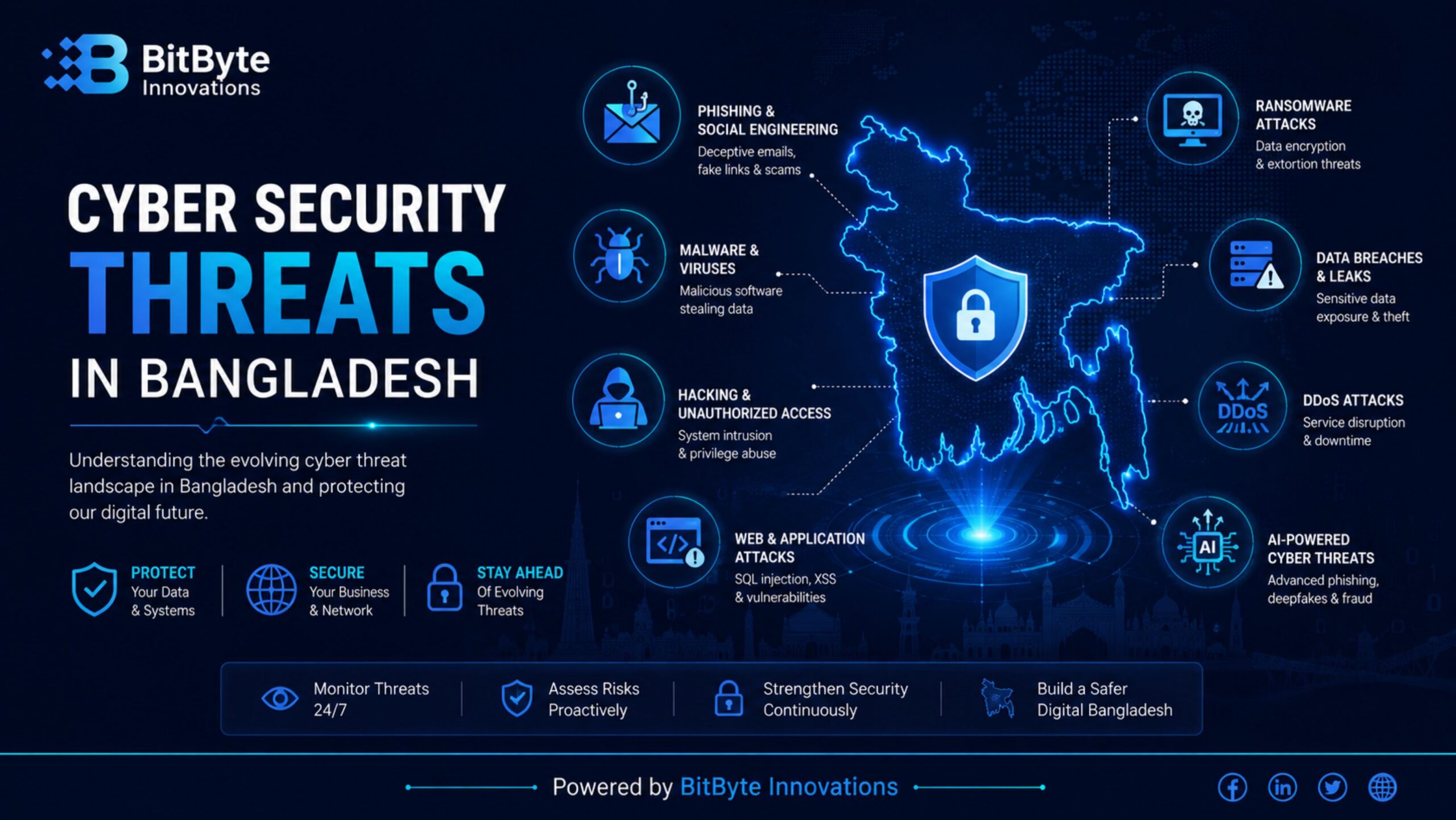
Cyber security threats in Bangladesh have moved well beyond the occasional suspicious email. Between organized fraud rings targeting mobile financial services, ransomware-as-a-service making attacks more frequent and more professional, and a wave of new 2026 regulation raising the compliance bar for financial institutions, the threat landscape has shifted faster than most local businesses’ defenses have kept up.
Below are the five cyber threats currently doing the most damage to Bangladeshi individuals and businesses, based on recent incidents and regulatory activity — and what each one means if you run a business here.
Understanding the common cyber threats in Bangladesh businesses actually face is the first step toward defending against them — not the generic, global “top 10 threats” list most security blogs recycle, but the specific patterns showing up in Dhaka, Chattogram, and everywhere in between right now.
1. Mobile Financial Services (MFS) Fraud and OTP Phishing
Among all cyber security threats in Bangladesh, this is the most common cyber attack today, and it targets both individuals and the businesses that pay or receive money through mobile financial services. The pattern is consistent: a caller impersonates bKash or Nagad customer support, claims there’s a problem with the account, and asks the victim to share the OTP sent to their phone. The moment it’s shared, the account is drained.
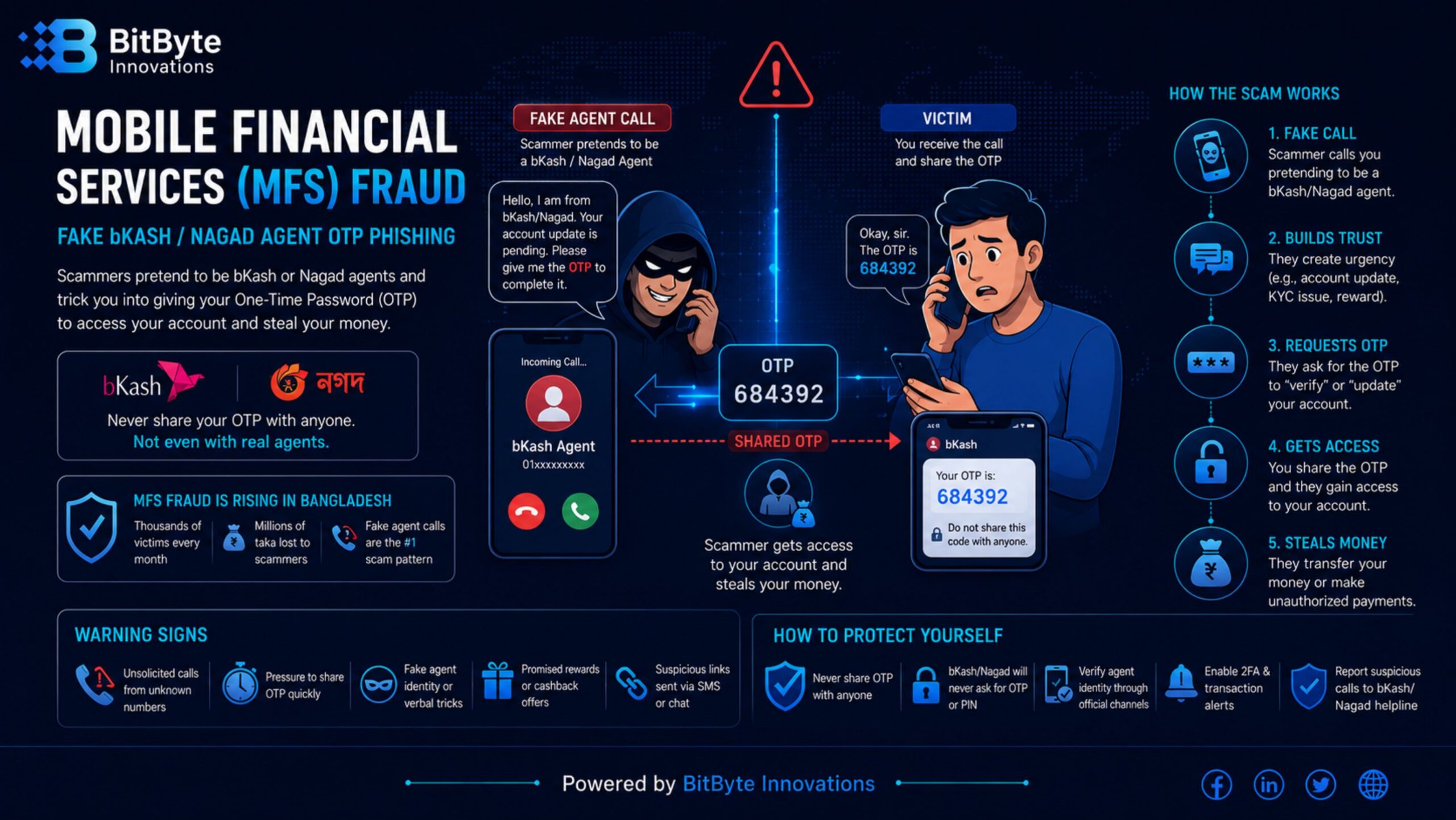
Roughly one in ten regular MFS users experiences a scam attempt in a given year, with typical losses in the thousands of taka per incident. For a business, the risk isn’t just employees falling for these calls personally — it’s that staff handling company MFS accounts for payroll, vendor payments, or customer refunds are exposed to exactly the same tactic, at a much higher potential loss per incident.
A newer variant worth watching: AI voice cloning scams that convincingly mimic a real person’s voice, increasingly used around high-transaction periods like Eid and Pohela Boishakh.
2. Ransomware Attacks
Ransomware sits near the top of any list of cyber security threats in Bangladesh businesses face today, and it has become more frequent and more professional as criminal groups increasingly operate on a ransomware-as-a-service model — essentially renting out ready-made ransomware tools to less technically sophisticated attackers. This lowers the barrier to entry for launching an attack, which is part of why ransomware has moved from a rare, headline-making event to a recurring risk for mid-sized businesses specifically, not just large enterprises or banks.
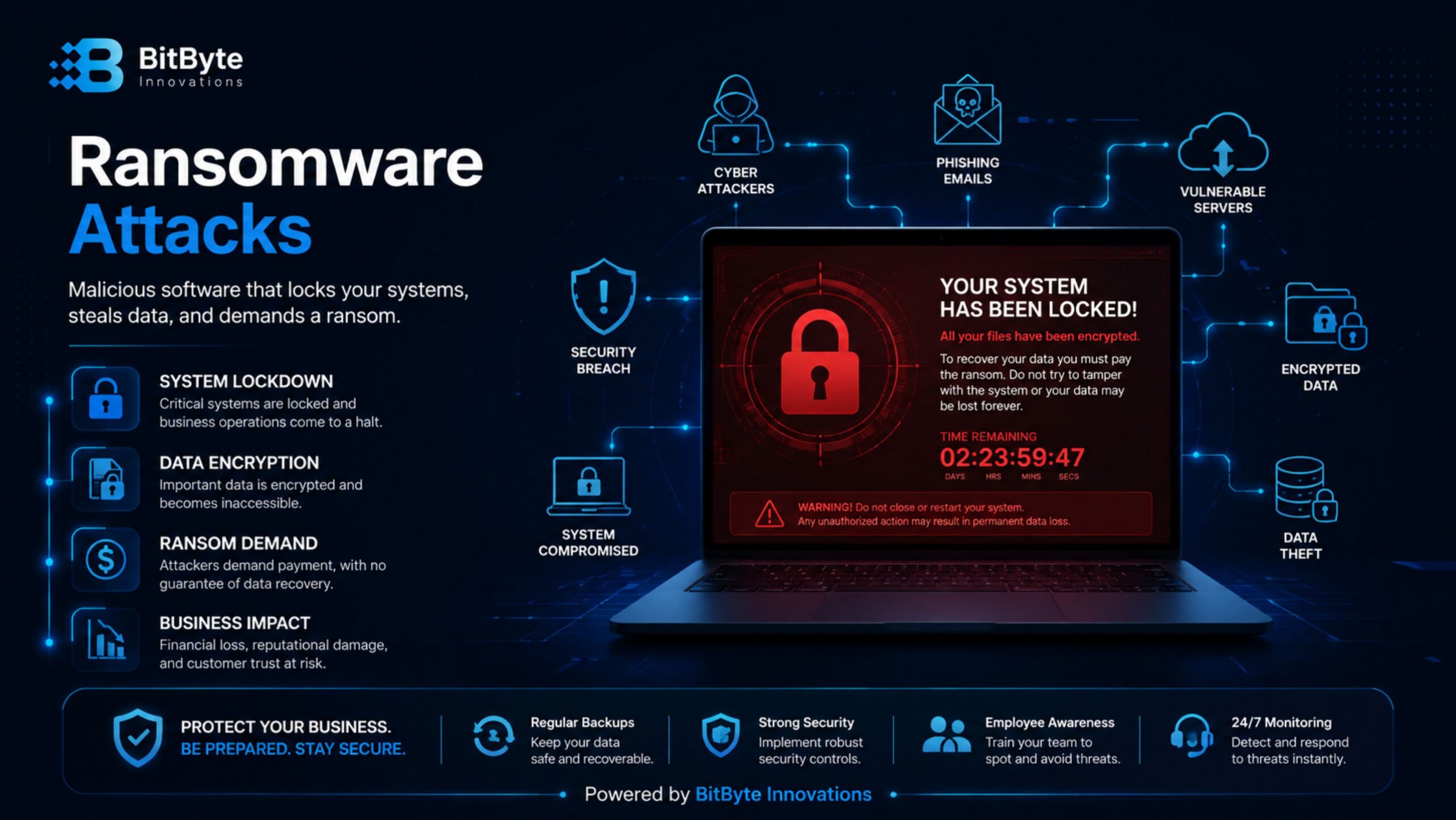
Businesses without regular, tested backups and basic network segmentation are the most exposed, since a single compromised device can sometimes be enough for ransomware to spread across an entire internal network. Ransomware attacks Bangladesh businesses now face are increasingly professionalized, with some criminal groups even offering “customer support” to guide victims through paying the ransom — a sign of how commercialized this threat has become, not a reason for reassurance.
3. Phishing and Business Email Compromise
Phishing attacks Bangladesh companies encounter increasingly go beyond generic “you’ve won a prize” emails. Business email compromise specifically targets companies by impersonating an executive or vendor, requesting an urgent payment or a change to bank transfer details. These attacks succeed by exploiting normal business trust and urgency rather than any technical vulnerability, which is exactly why they bypass even fairly strong technical security setups.
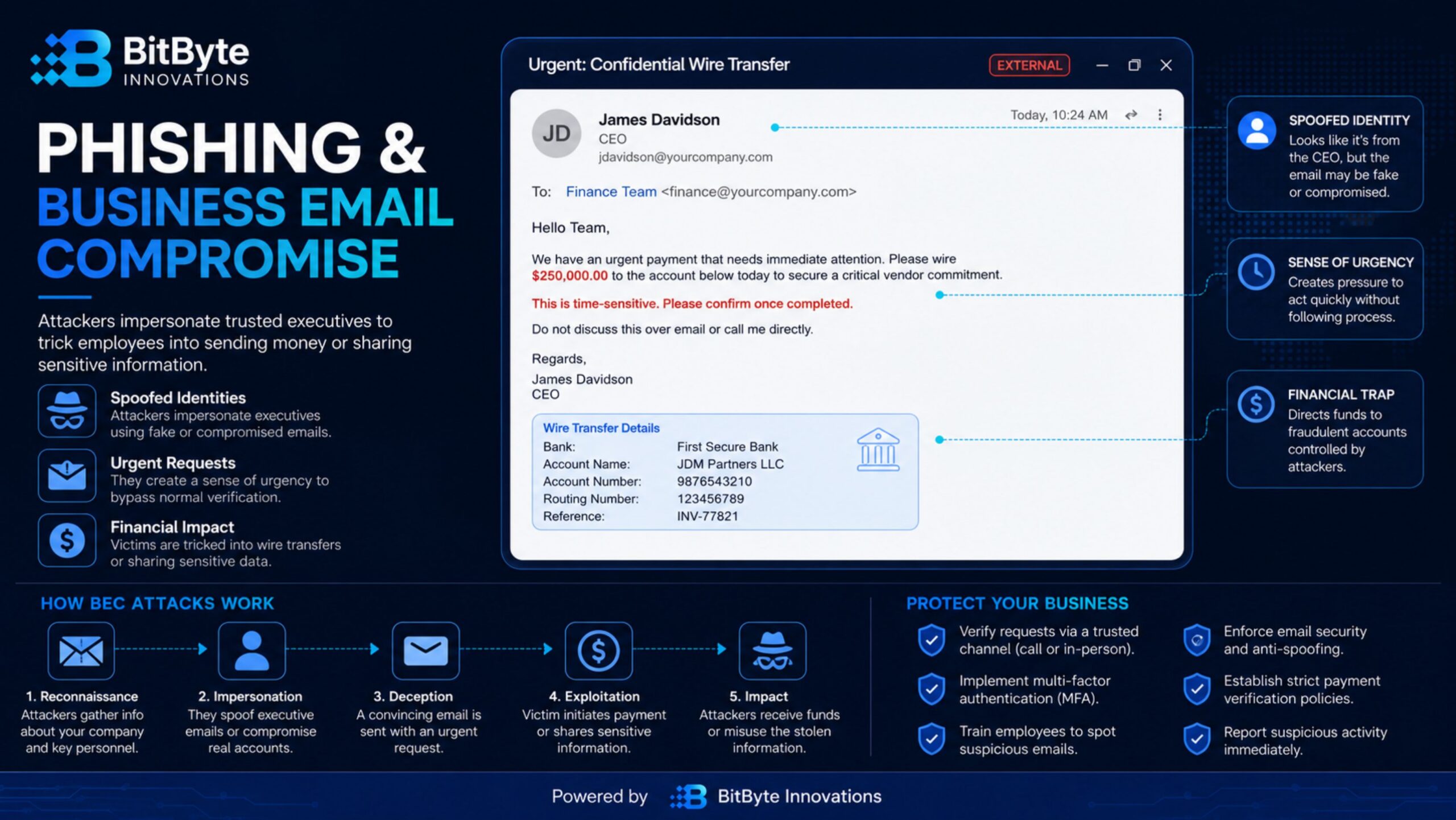
Malware built specifically to target Bangladeshi banking apps has also appeared — one campaign was found autofilling stolen credentials into banking apps and intercepting SMS messages containing keywords tied to local mobile financial services, a reminder that phishing and malware threats increasingly overlap rather than operating as separate risks.
4. DDoS Attacks
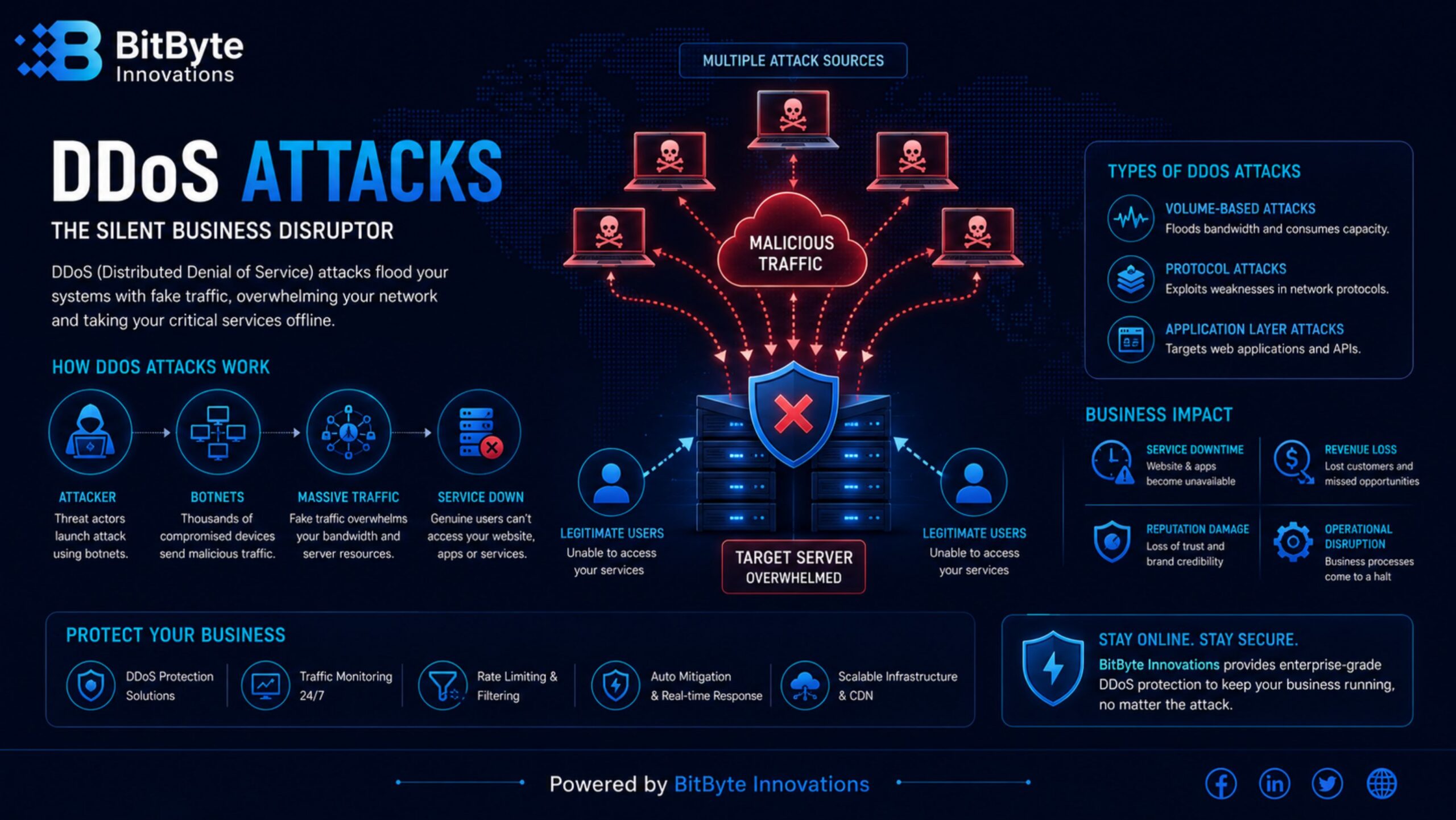
DDoS attacks Bangladesh businesses experience flood a website or service with fake traffic until it can no longer respond to real visitors, effectively taking a business offline for as long as the attack continues. For an e-commerce store, a booking platform, or any business that depends on its website being reachable, even a few hours of downtime during a peak sales period can be costly—and these attacks are increasingly paired with extortion demands, not used as standalone disruption alone.
5. Regulatory and Compliance Risk
This one isn’t a threat in the traditional sense, but it belongs on this list because it changes what “acceptable” security looks like for many Bangladeshi businesses in 2026. Bangladesh Bank issued a nationwide Cyber Security Framework in March 2026, requiring all banks, finance companies, mobile financial service providers, and payment operators to comply by December 31, 2026 — including measures like multi-factor authentication and real-time monitoring.
Separately, the Cyber Protection Act 2026 established a National Cyber Security Agency, and a further Cyber Security Amendment Act is currently under government review. Businesses that touch payments, financial data, or critical infrastructure in any way should expect security expectations — and potential liability for failing to meet them — to keep tightening through the rest of 2026. A data breach Bangladesh business suffers today can trigger both reputational damage and, increasingly, direct regulatory consequences under this tightening framework.
How Bangladeshi Businesses Can Defend Against These Threats
None of these five threats require an unrealistic security budget to meaningfully reduce. Together, these patterns show that cyber attacks in Bangladesh are shifting from isolated, opportunistic incidents to organized, repeatable operations — which means defense needs to be systematic too, not a one-time fix. A few priorities cover most of the exposure:
- Train staff who handle payments or MFS accounts specifically on OTP and impersonation scams — this is the single highest-frequency threat on this list
- Maintain tested, offline backups so a ransomware incident is a recoverable inconvenience rather than a business-ending event
- Verify any payment or bank detail change request through a second channel, not just the email or call requesting it
- Put basic DDoS protection and monitoring in place before an attack happens, not after
- Run a vulnerability assessment or penetration test to find out where your actual exposure is, rather than guessing
This is where business cybersecurity Bangladesh companies invest in tends to pay for itself many times over: the cost of staff training, tested backups, and a periodic security assessment is consistently smaller than the cost of recovering from even one successful ransomware or fraud incident, before factoring in reputational damage or regulatory exposure.
For businesses that process payments, hold customer data, or fall under the new Bangladesh Bank framework specifically, a structured cybersecurity services engagement—covering network security, monitoring, and incident response — is usually far cheaper than recovering from even one successful attack.
Staying Ahead of a Fast-Moving Threat Landscape
What makes cyber security threats in Bangladesh worth revisiting regularly, rather than addressing once and moving on, is how quickly the specific tactics change even when the underlying categories stay the same. OTP phishing scripts get refined, ransomware groups adopt new delivery methods, and regulatory requirements keep tightening — which means a security posture that was adequate a year ago may already have gaps today. Businesses that treat security as an ongoing process, with periodic reassessment, consistently fare better than those that implement a fixed set of protections once and assume the job is done.
Frequently Asked Questions
What is the most common cyber attack in Bangladesh right now?
OTP phishing scams impersonating bKash or Nagad customer support are currently the most widespread, affecting both individuals and businesses that handle mobile financial service transactions.
Are Bangladeshi businesses required to comply with new cyber security regulations?
Banks, finance companies, mobile financial service providers, and payment operators must comply with the Bangladesh Bank Cyber Security Framework by December 31, 2026. Other businesses aren’t directly covered by this specific framework but should expect broader regulatory expectations to increase under the Cyber Protection Act 2026.
How can a small business protect itself without a large security budget?
Staff training on phishing and OTP scams, tested backups, and verifying payment changes through a second channel cover most of the highest-frequency risks at minimal cost — before investing in more advanced monitoring or testing.
How do I choose between different cybersecurity providers?
When evaluating the cybersecurity services Bangladesh vendors offer, ask specifically about backup testing, incident response time, and whether they provide ongoing monitoring — not just a one-time scan or antivirus installation, which covers only a small part of the threats outlined above.
Not sure where your business actually stands on any of these five cyber security threats in Bangladesh?
BitByte Innovations’ cybersecurity services in Bangladesh start with a free security audit to find your real exposure before recommending anything. Get a free security audit →